 Business License

About SMT high precision connector injection
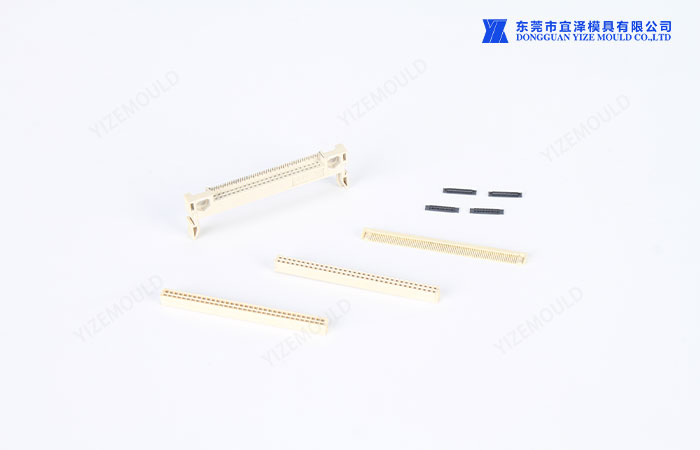
With the development of technology, many objects are now becoming lighter, smaller, and smarter, because they are easy to carry and easy to use, and the connector industry is no exception. Under the current trend of smaller and smaller connectors, it also poses a huge challenge to the material of the connector. Under this trend, high-temperature nylon and LCP emerged as the times require, and they shine in the field of SMT high precision connector injection.
1. What are the requirements for materials for SMT high precision connector injection?
SMT connector, that is, patch connector. With the development of the times, connectors have become the few remaining punched parts on most PC boards. Manufacturers have also found that by reducing or eliminating the use of hybrid soldering techniques (that is, using both surface mount and through-hole components on the same circuit board), and using all SMT processes can improve production efficiency and reduce costs for manufacturers.
So what are the requirements for materials for SMT high precision connector injection? Mainly focus on the following points:
1). Mechanical properties
The high precision connector injection needs to fix the terminal, so the material must have a certain strength and rigidity; in the later stage, tests such as swing test and impact test will be carried out to check the product quality, so it must have a certain degree of toughness.
2).Thermal performance
The material must be resistant to high temperatures. The later stage of SMT connector requires lead-free soldering process, the temperature is about 260 degrees, about 15s, so the material must have high temperature resistance, that is, the short-term heat resistance index HDT must meet the conditions. However, the resistance to long-term use temperature (RTI index) does not need to be too high, depending on the function of the connector.
3).Electrical performance
All connector plastic parts must be insulated;
High-frequency products may require certain requirements for dielectric constant and loss factor;
Some shell and bracket products also need to have anti-static requirements.
4).Flame retardant and environmental protection
The flame retardancy of most products basically conforms to UL94V0. Under the trend of environmental protection, most of them pursue halogen-free, but currently half of them are halogen-free and half of them are halogen.
5).Physical and chemical properties
Due to the need to contact solder paste, salt spray testing, and some customer requirements, the material needs to have a certain chemical resistance; in addition, UV resistance, low water absorption, and dimensional stability are required.
6). Appearance and dyeing
The current connectors need to have various color requirements no matter on the motherboard or other parts, so the material must have good dyeing performance, and also have good color stability under high temperature conditions, and it is not easy to fade.
7).Processability
Processing performance is very important, because the connector industry has low profits and high volume, so the number of mold cavities is relatively large, so a wide material processing window, low mold scale, and low corrosion are required to reduce the loss of downtime. Some products require high flatness and low warpage.
This article is reproduced to https://www.yizemould.com/newsdetail-937.html
tyzieyize
Recently Posted
-
ABS 30% anti-static thermoplastics injection molding
May 4, 2023Case Study: Co-Molding 5 Products with One Set for ABS 30% anti-static thermoplastics injection moldingIntroduction:Our client required the production of five different ABS 30% anti-static thermoplastics injection molding, all to be co-molded using only one set of molds. The parts needed to meet specific surface quality requirements, with different areas designated as either A-Level or B-Level surfaces.A-Level Surface ReRead More -
Solenoid valve housings made of PBT 30% Engineering Plastics injection molding
May 4, 2023Case study of a problem that manufactures solenoid valve housings made of PBT 30% Engineering Plastics injection molding.The company found the following problems in the PBT 30% Engineering Plastics injection molding:1. The red circle has burrs, with a step difference of about 0.05;2. The appearance of the red circle is uneven and the knife lines are serious;3. The red circle has fiber marks and serious air trapping. ThisRead More -
Case study Amphenol with LCP E130i Thermoplastics Precision Molded V-0 Material
May 4, 2023Introduction: Amphenol is a leading manufacturer of high-quality electronic connectors and interconnects systems. When Amphenol approached us to produce molded parts for their products using LCP E130i Thermoplastics Precision Molded V-0 material, we knew we had a challenging task ahead of us. This material is known for its high strength and excellent flame retardant properties, but it also has specific requirementsRead More -
Radio-frequency high precision connector injection? Why Special engineering plastics?
February 3, 2023For connectors, especially high-frequency and radio-frequency high precision connector injection, in addition to the excellent design and manufacturing process, another key factor that determines the quality of the product is the quality of its manufacturing materials. Special engineering plastics have the greatest use in connector applications. The advantage is insulation.Usually the connectors are small, with a typicalRead More

Contact Us
Recommended Products
-
 Teflon™ PFA 440HPB Teflon Plastic Injection Mold Mould Beaded Connector FactoryUS$ 50 - 210MOQ: 1 Pair
 -
Teflon™ PFA 440HPB Teflon Plastic Injection Mold Mould 4-layer Sealed Structure FactoryUS$ 50 - 210MOQ: 1 Pair
-
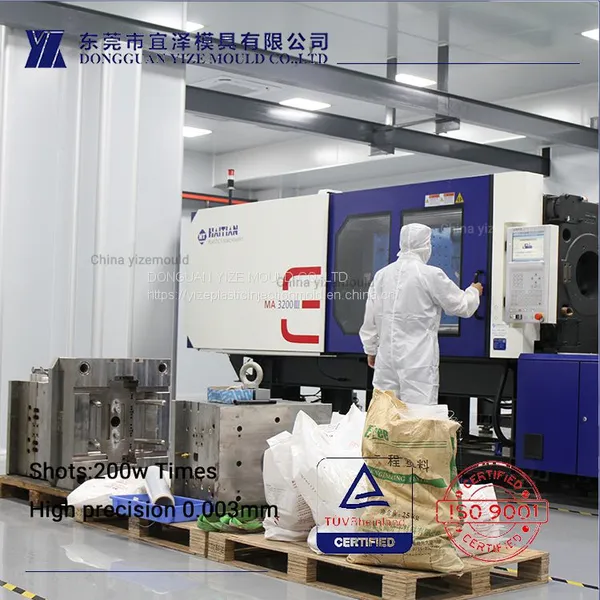
Teflon™ PFA 440HPB Teflon Plastic Injection Mold Mould Produced in a 100,000-class Clean RoomUS$ 50 - 210MOQ: 1 Pair
-
Teflon™ PFA 440HPB Teflon Plastic Injection Mold Mould Japanese Daikin 211SH High-purity Raw MaterialsUS$ 50 - 210MOQ: 1 Pair
-
Teflon™ PFA 440HPB Teflon Plastic Injection Mold Mould Plating FactoryUS$ 50 - 210MOQ: 1 Pair
-
Sumitomo Fiber Optic Connector Mould Electrical Connectors for SaleUS$ 50 - 210MOQ: 1 Pair
-
Electric Wire Sumitomo Small Waterproof Connector Mould SupplierUS$ 50 - 210MOQ: 1 Pair
-
High-Frequency Sumitomo Industrial Connector Mould SupplierUS$ 50 - 210MOQ: 1 Pair
-
High-Frequency Sumitomo Mechanical Connector Mould SupplierUS$ 50 - 210MOQ: 1 Pair
-
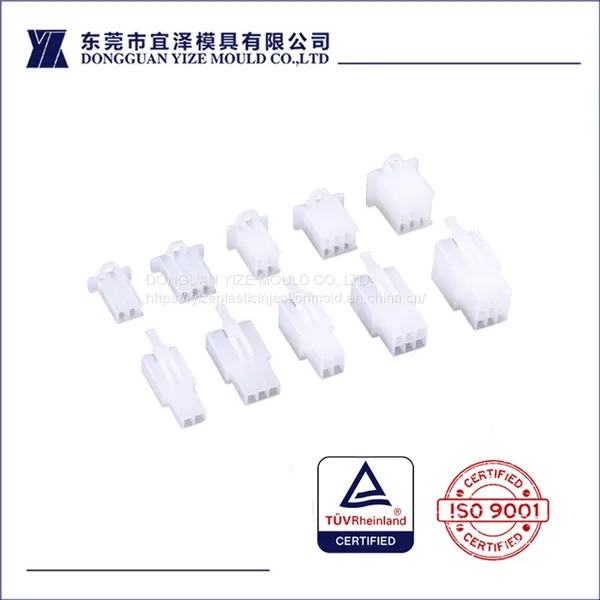
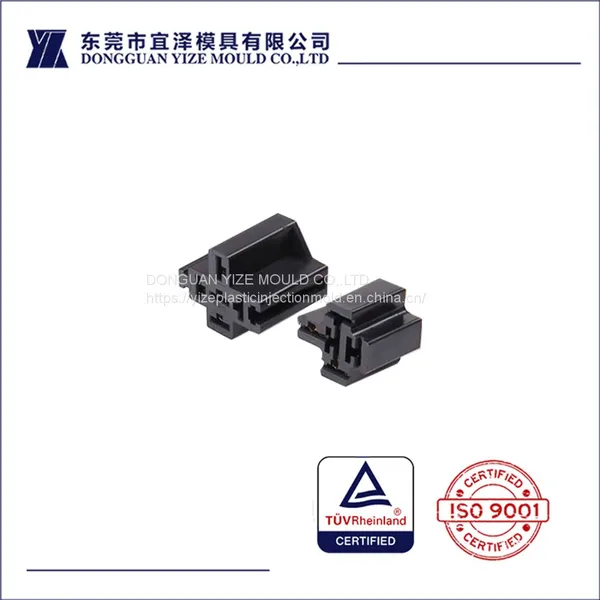
Dummy Plugs Sumitomo Electric Industries Connector Mould SupplierUS$ 50 - 210MOQ: 1 Pair
-
Sumitomo Electric Pa66 Gf35 Connector Mould Device SupplierUS$ 50 - 210MOQ: 1 Pair
-
Sumitomo Technologies Pa66 Gf35 Connector Housing Mould SupplierUS$ 50 - 210MOQ: 1 Pair
-
Terminal Sumitomo Connector Mould Electrical Wiring and Controls for Cars With ISO 9001 CertificationUS$ 50 - 210MOQ: 1 Pair
-
Sumitomo Pcb Connector Mould Housings Terminals and Accessories With ISO 9001 CertificationUS$ 50 - 210MOQ: 1 Pair
-
Hybrid Sumitomo Connector Mould Automotive & Components With ISO 9001 CertificationUS$ 50 - 210MOQ: 1 Pair
-
Sumitomo Pa66 Gf35 Connector Mould for Vehicle With ISO 9001 CertificationUS$ 50 - 210MOQ: 1 Pair
-
Hybrid-type Sumitomo Pa66 Gf35 Connector Mould With ISO 9001 CertificationUS$ 50 - 210MOQ: 1 Pair
-
Sumitomo Pa66 Gf35 Connector Mould With High Temperatures With ISO 9001 CertificationUS$ 50 - 210MOQ: 1 Pair
-
Waterproofing Sumitomo Pa66 Gf35 Connector Mould With ISO 9001 CertificationUS$ 50 - 210MOQ: 1 Pair
-
Sumitomo Pa66 Gf35 Connector Mould Harness Components With ISO 9001 CertificationUS$ 50 - 210MOQ: 1 Pair